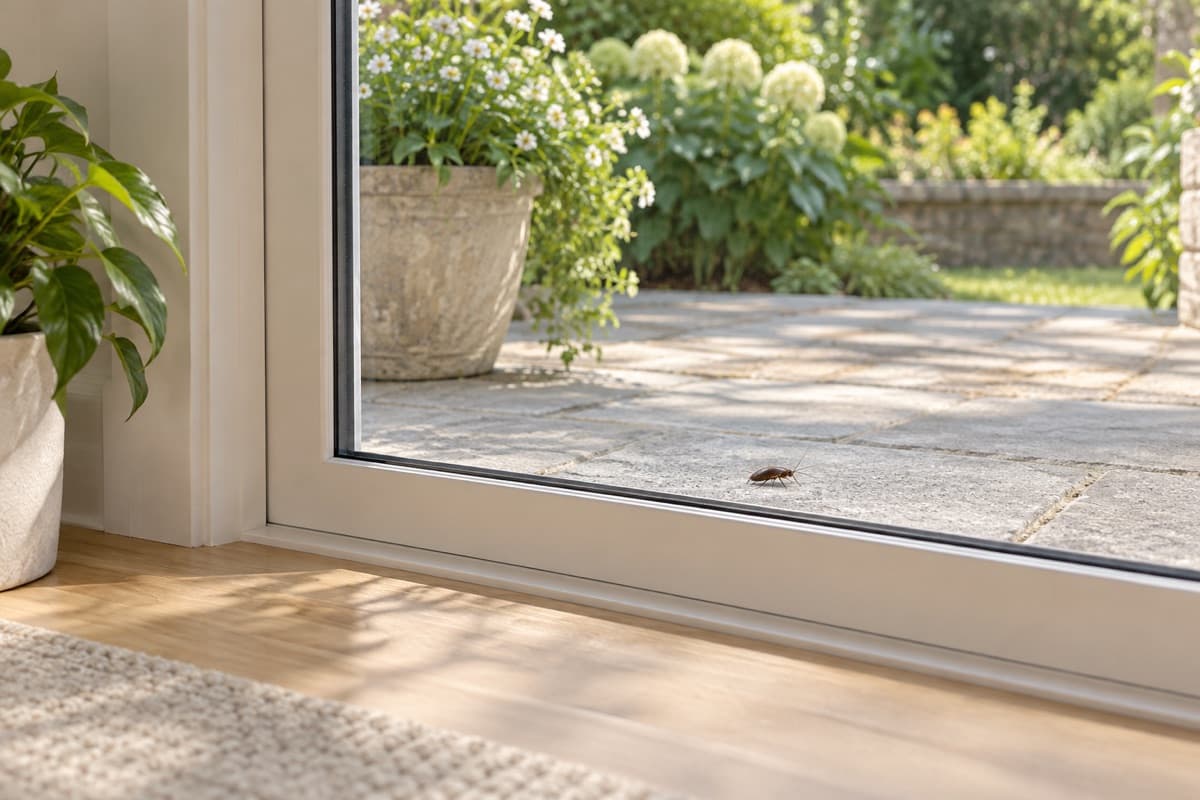
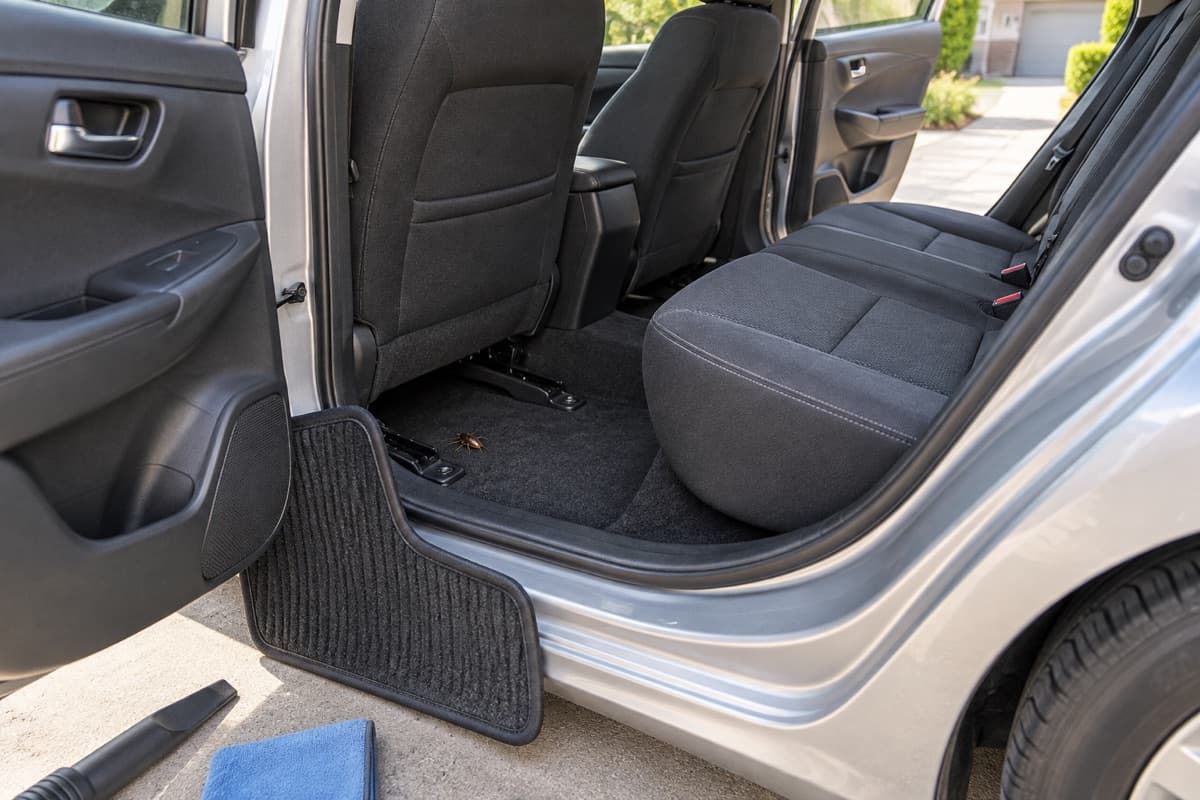
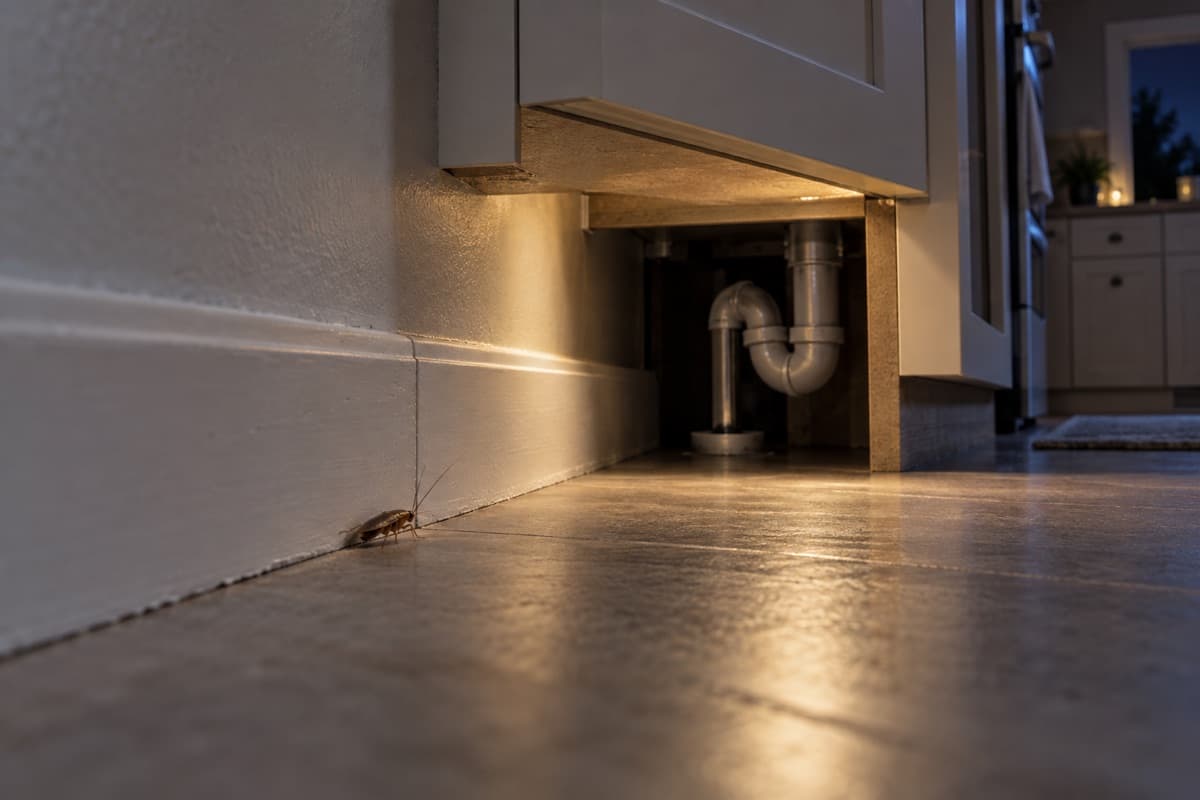
Clean the dishwasher, but treat the void around it. Pull the toe-kick panel and vacuum the cavity underneath, scrub the door gasket and the sump filter by hand, clean the drain air gap on the countertop, and run a hot sanitizing cycle empty. Then put gel bait in the surrounding cabinet and toe-kick voids — never inside the machine. Every cockroach bait label carries the statement that "it is a violation of federal law to use this product in a manner inconsistent with its labeling", and the EPA-accepted label for Advion Cockroach Gel Bait is explicit on both counts: "Do not apply to surfaces that food contacts," and do not apply to surfaces above 120–130°F, listing dishwashers by name. Roaches in a dishwasher almost always mean a German cockroach population living in the cabinet run around it, so plan on treating the kitchen, not the appliance.
The previous version of this article recommended vinegar as the treatment, silicone caulk on the appliance, and bay leaves or cucumber slices left inside between uses. None of that is supported, and all of it has been removed.
Why Your Dishwasher, And Why It Is Never Only The Dishwasher
A dishwasher sits at the intersection of everything a German cockroach needs. NC State Extension's German cockroach guide lists the dishwasher first among the kitchen areas to inspect, alongside the refrigerator and cabinets, and notes that they also colonize appliances outside the kitchen — washing machines, coffee machines — wherever food, water, warmth and a tight void occur together.
Tight is the operative word. In W. Ebeling's Urban Entomology, hosted by UC Riverside's Department of Entomology, adult German cockroaches are described as able to move through a space only 1.6 mm wide, with 67% of adults in one test aggregating in a 4.8 mm gap — UC IPM puts it at about 1/16 inch. A door gasket, the seam behind a toe-kick panel, and the gap where the tub meets the cabinet frame are all wider than that. Ebeling also explains why they cluster in one spot: an aggregation pheromone in cockroach feces and on their bodies draws others to it. That is why droppings pile up in one corner of the gasket, and why a gasket scrubbed everywhere except the seam keeps re-attracting traffic.
The population math is unforgiving. Rutgers NJAES reports that a single German cockroach female produces 5 to 8 egg cases totaling 200 to 250 eggs, on a life cycle of roughly 100 days. And per the University of Florida's assessment-based cockroach management guide, "if you see cockroaches during the daytime, it may be an indication that you are dealing with an extremely large population." Roaches spilling out of an appliance you open in daylight is that signal.
If you have not yet worked out where the pressure is coming from, our guide to figuring out where roaches are coming from covers the inspection before you start treating.
The Five Places To Actually Look
Do this with a flashlight, ideally at night. Turn off the dishwasher's breaker before removing any panel.
- The door gasket and door edge. Peel the rubber back gently along its whole length. Droppings look like ground pepper or coffee grounds smeared into the seam. Check the bottom edge of the door and the lip it seals against.
- The sump and filter assembly. Pull the lower rack. This is where food film, grease and standing water collect.
- The toe-kick void. The panel below the door is usually held by two screws. Behind it is an open cavity running under the machine and often connecting to the cabinet run on either side. UC IPM specifically directs inspection and treatment "underneath appliances" and behind "kick panels on refrigerators and stoves." This is the single most productive spot.
- The motor and pump housing. Warm, dry, sheltered, and full of crevices. UC IPM notes that egg cases turn up around "refrigerator and other appliance motors." You are looking, not treating.
- The countertop air gap. If your sink has a small chrome cylinder next to the faucet, that is the dishwasher's drain air gap. GE's instructions are to lift the chrome cover off, unscrew the plastic cap, and remove any accumulated material. It fills with food debris and opens to room air, which makes it both a food source and a travel route.
While the toe-kick is off, look at where the supply line, drain hose and electrical cable pass through the cabinet side walls. Those penetrations are how a population in one cabinet bay reaches the next one. Keeping roaches out of cabinets goes through sealing that run properly.
Cleaning It Safely
Plan on an hour. No pesticide is involved in any of this.
- Turn off the breaker serving the dishwasher before removing the toe-kick panel. Restore it before running a cycle.
- Vacuum the toe-kick void, the door seam and the floor beneath the machine with a crevice tool. Rutgers recommends "a vacuum cleaner with HEPA filter to remove live and dead cockroaches, the fecal materials, shed skins." Empty the canister into a sealed bag in an outdoor bin.
- Scrub the gasket by hand with hot soapy water. University of Florida guidance is blunt about why detergent matters: "no-rinse cleaners only spread allergens, they do not remove them." Use a soft brush along the seam, then rinse with a clean wet cloth. Repeat until the water runs clear.
- Remove and clean the filter. Whirlpool's instructions are to turn the upper filter assembly a quarter turn counterclockwise, lift it out, then lift and pull the lower filter forward. Rinse under running water. Whirlpool warns: "Do not use a wire brush, scouring pad, etc., as they may damage the filters," and "to avoid damage to the dishwasher, do not operate your dishwasher without the filters properly installed."
- Clean the air gap per the steps above, and check that the hose from the air gap to the drain or disposer is not clogged.
- Run an empty cycle on the hottest setting your machine has. On a dishwasher certified to NSF/ANSI 184, the sanitizing cycle runs until the water reaches roughly 150°F and is rated to reduce bacteria on dishware by 99.999%, as GE describes it. Understand what that buys you: it cleans and sanitizes the interior surfaces. It is not a pest treatment and it does not reach the void behind the machine.
- Wash your hands and clean the surrounding floor and cabinet faces with hot soapy water. Cockroach allergen is the reason — see how to clean roach droppings for the full allergen-first method.
Where The Bait Goes, And Where It Absolutely Does Not
Gel bait is the workhorse of German cockroach control, and placement is the whole game. Using the Advion label as the reference, the rules that matter here are:
- Not inside the machine. "Do not apply to surfaces that food contacts." The tub, racks, door interior, and anything dishes touch are off limits.
- Not on hot surfaces. "Do not apply Advion Cockroach Gel Bait to surfaces where the temperature exceeds 120-130°F because this could cause the bait to liquefy and lose effectiveness." The label's own examples include dishwashers and hot water pipes.
- Yes to the surrounding voids. The label directs application "behind and under appliances, cabinets, sinks, closets," into "openings leading into voids and hollow spaces in floors, walls, ceilings, equipment legs and bases, around plumbing pipes."
- Small and many. Each spot is about 0.5 grams, roughly a quarter inch across. Light to moderate infestations get 1 to 3 spots per 10 linear feet; heavy infestations get 3 to 5. Rutgers estimates a one-bedroom apartment may need 10 to 30 grams of bait total.
- Out of reach of children and pets. "Do not treat areas that are easily accessible to children and pets."
Practically: bait the back corners of the toe-kick cavity, the underside of the sink cabinet, the hinge corners of adjacent cabinet doors, and around the plumbing penetrations — then reinstall the toe-kick panel. Our walkthrough of how to use Advion roach gel correctly covers dosing and follow-up.
One rule people get wrong: do not apply residual spray on or near baited surfaces, and do not bait a surface that was recently sprayed. The Advion label prohibits both, and UF/IFAS explains why — "using a product with repellent properties in an area where bait may be applied will render the bait ineffective."
What Not To Do
- Do not spray insecticide into the dishwasher, its controls, or its motor. Beyond the food-contact violation, the Advion label carries a physical-hazard statement worth generalizing: "Do not use this product in or on electrical equipment where a possibility of shock hazard exists."
- Do not set off a fogger. UC IPM states that total-release foggers "are often ineffective," "can be hazardous," and "may repel and disperse cockroaches to other areas." NC State adds that foggers "fail to penetrate the crevices and hidden areas where cockroaches harbor." Our piece on how many roach foggers you need explains why the honest answer is usually none.
- Do not pour bleach, drain cleaner, or ammonia into the dishwasher or the air gap. Drain chemicals damage plastic hoses and rubber seals, and bleach mixed with ammonia-based cleaners produces toxic gas.
- Do not caulk the appliance in place. You will need to service it, and sealing the tub to the cabinet traps moisture.
- Do not rely on bay leaves, cucumber, or essential oil sprays. No extension or regulatory source supports any of them for cockroach control.
Prevention That Actually Holds
- Fix the water. EPA's pest-control guidance for housing managers puts it directly: "Fix leaking pipes and faucets as soon as possible." Check the dishwasher supply connection, the drain hose clamp, and the sink trap above it.
- Do not leave dirty dishes overnight, and scrape plates before loading rather than letting film accumulate in the sump.
- Leave the door ajar after a cycle so the interior dries instead of staying warm and damp.
- Clean the filter on schedule. Whirlpool suggests monthly with frequent use, every two weeks for daily use.
- Clean the air gap every few months if you run the machine daily.
- Seal the cabinet penetrations around pipes and wiring with caulk or foam once the population is down. CimeXa's label makes the same point: seal those cracks "once insect problems have been eliminated, to help prevent future problems."
- Keep monitors down. Sticky traps in the sink cabinet and beside the dishwasher tell you whether you are winning. UF/IFAS advises dating and numbering monitors; traps holding multiple life stages mean an established infestation, while one or two adults suggest a new introduction.
When To Call Someone
Call a pest management professional if you are seeing roaches in daylight, finding them in more than one room, sharing walls with an infested unit, or still catching nymphs after four to six weeks of correct baiting. Rutgers' benchmark is repeating bait applications every two to four weeks until no cockroaches are found over a four-week period; if you are not converging on that, the population is bigger than your bait placements.
Call an appliance technician if you find droppings inside the control panel or motor housing, or if the machine trips its breaker, smells of burning plastic, or behaves erratically after cleaning. Do not open the motor housing yourself to chase roaches.
Frequently Asked Questions
Will running the dishwasher kill the roaches in it?
A hot sanitizing cycle kills insects exposed to the wash water and strips the food film they were feeding on, which is worth doing. It does not reach the door seam, the toe-kick void, the motor housing, or the cabinet cavity — where the population actually lives. Treat the cycle as cleaning, not control.
Can I put roach gel bait inside the dishwasher if I put it somewhere dishes do not touch?
No. The Advion label prohibits application to surfaces that food contacts and to surfaces exceeding 120–130°F, naming dishwashers explicitly. Applying a pesticide contrary to its label is a violation of federal law under FIFRA, and the bait would liquefy and fail anyway.
Is vinegar useful here at all?
Mildly, as a descaler. It is not an insecticide and has no residual effect on cockroaches. Hot water and dish detergent clean better, and detergent removes allergen rather than redistributing it.
Do roaches come up through the dishwasher drain?
Larger species can travel sewer lines, but German cockroaches — the small tan ones with two dark stripes behind the head — are structure-dwelling and spread through wall and cabinet voids rather than sewers. To rule the drain in or out, see how to stop roaches from coming up the drain.
How long should this take to work?
Weeks, not days. Bait kills the roaches that feed and, through their feces and carcasses, a second wave that feeds on those. Rutgers' standard is reapplying every two to four weeks until you record no cockroaches for a full month.
Is a dishwasher full of roaches a health risk?
The two documented concerns are allergen and mechanical contamination. Cockroach feces, saliva, eggs and shed cuticles are well-established asthma allergens; 60% to 80% of inner-city children with asthma are sensitized to them. And a 2026 systematic review and meta-analysis of 31 studies and 8,021 samples found a pooled Salmonella prevalence of 15.2% in cockroaches. Wash the dishes that were in the machine, and clean the surfaces around it.
Sources
- EPA: Introduction to Pesticide Labels — pesticide labels are legally enforceable and carry the federal misuse statement.
- EPA-accepted label, Advion Cockroach Gel Bait (EPA Reg. No. 100-1484) — food-contact prohibition, the 120–130°F restriction naming dishwashers, electrical shock-hazard statement, spot size and rates.
- NC State Extension: German Cockroach Surveillance and Management — dishwasher and appliance harborage, bait placement, why foggers fail.
- Rutgers NJAES FS1322: German Cockroach — egg production and life cycle, HEPA vacuuming, bait quantities, and the four-week success standard.
- UC IPM Pest Notes: Cockroaches — 1/16-inch crevice use, kick panels and appliance motors, and the case against total-release foggers.
- University of Florida IFAS ENY-989: Assessment-Based Pest Management of German Cockroaches — daytime sightings as a population signal, monitor discipline, soapy water versus no-rinse cleaners, repellents defeating bait.
- W. Ebeling, *Urban Entomology*, Chapter 6 (UC Riverside) — 1.6 mm crevice access, aggregation pheromone in feces, appliance harborage.
- Whirlpool: How to Clean the Dishwasher Filters — filter removal steps, cleaning frequency, and the wire-brush warning.
- GE Appliances: Dishwasher — Cleaning the Air Gap — how to open and clear a countertop drain air gap.
- GE Appliances: Dishwasher — Sanitization Cycle — NSF/ANSI 184, the approximately 150°F final rinse, and the 99.999% figure.
- IRC Section P2717, Dishwashing Machines (UpCodes) — dishwasher backflow protection and waste connection requirements.
- EPA: Pest Control Resources for Housing Managers — leak repair and vacuuming as first-line IPM.
- Rockwell Labs CimeXa Insecticide Dust label — kickplate void access and sealing cracks after control is achieved.
- "The Cockroach and Allergic Diseases," *Current Allergy and Asthma Reports* — allergen sources and sensitization rates.
- Badri et al., "Cockroaches as *Salmonella* vectors," *International Journal of Environmental Health Research* (2026) — pooled 15.2% Salmonella prevalence across 31 studies.