Unplug the air fryer first and let it cool completely. Move it outside or over a trash bag, shake out the loose roaches and debris, then hand-wash every removable part in hot soapy water and wipe the interior and heating element with a damp, soapy cloth followed by a clean damp cloth. Never spray insecticide, pour water, or place any pest-control product inside the appliance. Throw away any food that was in it. If you find roaches, droppings, or egg cases inside the housing, vents, or control panel, where you cannot reach and verify the appliance is clear, stop using it and replace it. Either way, treat the roaches as a kitchen-wide problem, not an air fryer problem.
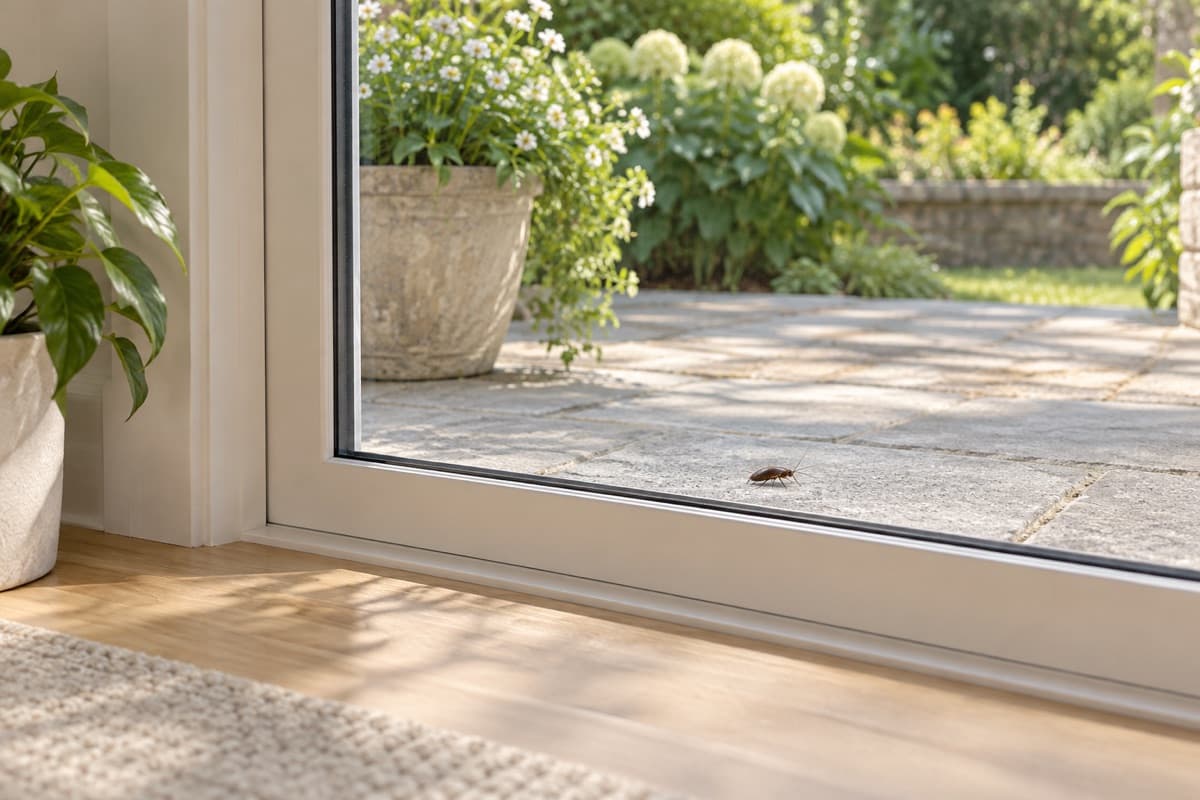
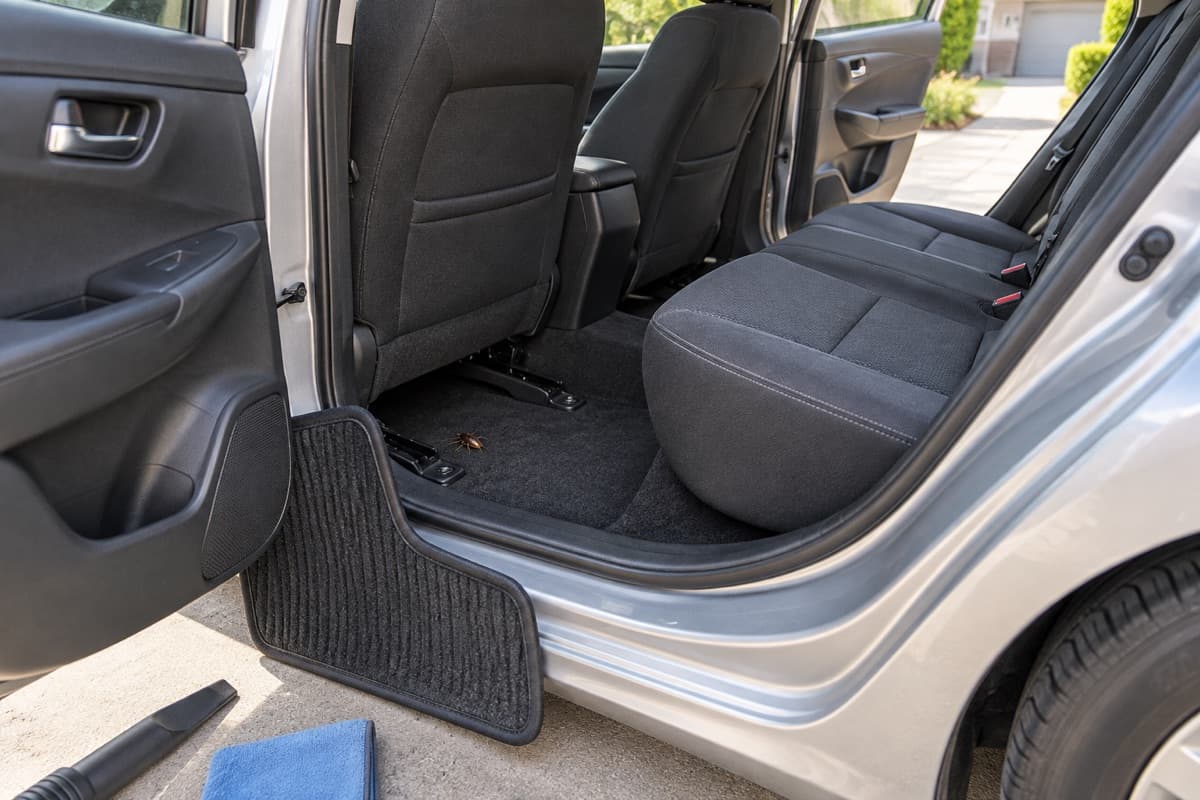
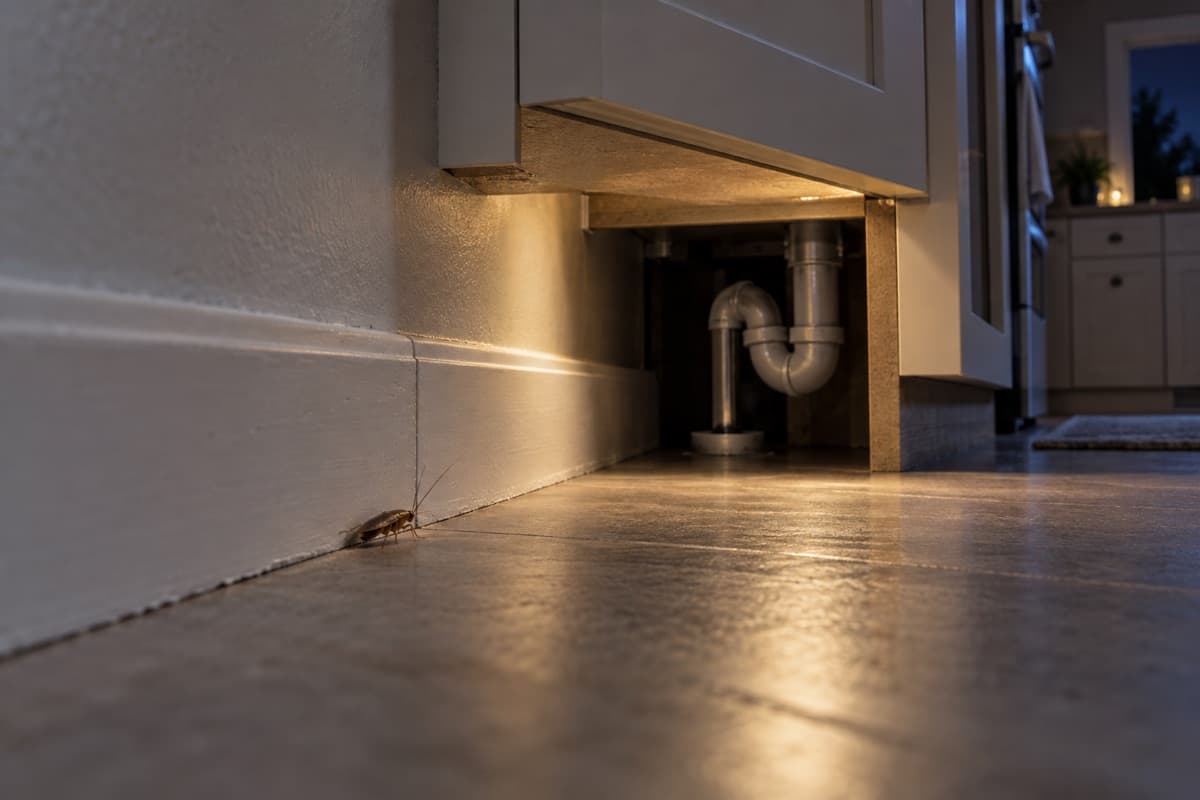
That last point is the one most people miss. Roaches do not live in an air fryer. They shelter in it. A countertop air fryer is warm, dark, greasy, and full of tight seams — exactly the harborage German cockroaches prefer, along with the spaces behind refrigerators, under dishwashers, and inside cabinet corners, as NC State Extension's German cockroach guide describes. If they are in your air fryer, they are also somewhere else in your kitchen, and cleaning the appliance alone will not fix that.
First: Decide Whether To Clean, Repair, Or Replace
Do this before you scrub anything, because it changes how much effort is worth spending.
Clean and keep it if:
- You saw a handful of roaches and they were sitting in the basket or drawer, not deep in the unit.
- The droppings and debris are on surfaces you can reach with a cloth or brush.
- The appliance has no scorching, no melted plastic, no exposed or chewed wiring, and no burning smell.
- It powers on normally, heats normally, and the fan runs smoothly.
Stop and replace it if:
- You find live roaches or egg cases (small dark brown capsules) inside the housing, vents, fan area, or control panel — places you cannot fully reach or inspect.
- You see chewed insulation, damaged wire, corrosion on contacts, or scorch marks.
- The unit trips a breaker, smells like burning plastic, sparks, or behaves erratically after cleaning.
- Debris rattles inside the shell and will not come out.
Have it serviced or discard it if it is still under warranty and behaving oddly. Contact the manufacturer rather than opening the housing yourself. Consumer air fryers are not designed to be user-disassembled, and prying the shell apart both voids the warranty and exposes you to mains-voltage components. An air fryer is inexpensive relative to an electrical fire; if you are genuinely unsure whether the inside is clear, replacing it is the reasonable call.
The Safe Cleaning Process
Give this about 45 minutes, most of which is soaking and drying time.
- Unplug the appliance at the wall. Do not rely on the power button. Let it cool for at least 30 minutes if it has been used recently.
- Carry it outside, to a garage, or over a lined trash can. You want the roaches leaving the appliance somewhere other than your kitchen counter.
- Remove the basket, crisper plate, drawer, racks, and any other detachable parts. Tip them out and knock loose debris into the trash bag. Tie the bag closed and put it in an outdoor bin immediately.
- Turn the main unit upside down over the bag and tap it gently to dislodge crumbs, droppings, shed skins, and anything hiding along the rim and vents. Do not shake it violently.
- Vacuum the interior, vents, and the seams around the door or drawer. A crevice tool works well. Vacuuming is the standard way to remove roaches, droppings, and egg cases, and a HEPA filter helps keep the allergen-heavy dust out of the air. Our guide to cleaning roach droppings has extra cleanup precautions. Empty the canister or bag outside afterward.
- Hand-wash the removable parts in hot, soapy water. Soak stuck-on residue for five to ten minutes first. Use a soft sponge or soft-bristle brush — most baskets have a non-stick coating that steel wool and abrasive powders will ruin. Check your manual before using the dishwasher; many baskets are dishwasher-safe, but not all.
- Wipe the interior and the heating element with a cloth dampened in hot soapy water, wrung out until it is not dripping. Philips' Airfryer cleaning guidance suggests laying the cooled, unplugged unit on a soft cloth and tipping it to reach the heating element, using a soft or medium brush on baked-on residue and never a steel wire brush.
- Wipe the exterior, control panel, cord, and plug with a barely damp cloth, then go over everything with a second cloth dampened in plain water to remove soap residue.
- Let every part air-dry completely — several hours, or overnight. Reassemble only when bone dry.
- If your manual allows running the unit empty, do so once for about 10 minutes in a ventilated room. This burns off residual moisture and odor; it is not a sanitizing step, and some manuals prohibit it, so check first. Stay nearby and stop immediately if you smell burning plastic or see smoke.
- Clean the counter, cabinet, and wall behind where it sat with hot soapy water, and wash your hands for at least 20 seconds — the same surface-and-hands routine the CDC recommends for preventing foodborne illness.
What Never Goes In Or Near The Inside Of An Air Fryer
This is the part where well-meaning advice online becomes genuinely dangerous. An air fryer's interior is a food-contact surface wrapped around an exposed electrical heating element and a motorized fan.
- No insecticide sprays, aerosols, dusts, gels, or baits inside the appliance, in the basket, or in the drawer. These products are not labeled for food-contact surfaces, and using a pesticide contrary to its label directions is both unsafe and illegal.
- No foggers or "bug bombs" aimed at, or used in the same enclosed cabinet as, the appliance. The National Pesticide Information Center notes that fogger mist settles on exposed surfaces and does not reach the voids and crevices where roaches actually hide, and the EPA's fogger safety guidance warns that the contents are flammable and should never be used in confined spaces like closets, cabinets, or under counters. UC IPM reaches the same conclusion: aerosol insecticides and total-release foggers "are often ineffective since they don't reach the crevices where cockroaches harbor and breed," and "may also repel and disperse cockroaches to other areas." A controlled study of foggers used against German cockroaches in occupied homes found that no fogger product reduced roach numbers below baseline, while depositing insecticide on kitchen surfaces at an average of 603 times pre-treatment levels. Gel baits in the same homes worked and left no detectable residue.
- No powders of any kind inside the unit, including food-grade ones. Loose powder gets pulled into the fan and onto the heating element, where it bakes, smokes, and can obstruct airflow.
- No essential oils, vinegar bombs, or repellent liquids poured or sprayed into the interior. Oils leave a residue that polymerizes on the element, and liquids near electrical components create shock and short-circuit risk.
- Never submerge the main unit. Manufacturers are uniform on this: the base that plugs in goes nowhere near a sink, and never into a dishwasher. Wipe it, do not soak it.
- Never clean it while it is plugged in, warm, or wet. And never plug it back in until it is fully dry.
Food Safety: What To Throw Out
Cockroaches move between drains, garbage, and food surfaces, and they contaminate food and utensils along the way. UC IPM notes they can carry organisms including Staphylococcus, Streptococcus, and coliform bacteria, and their droppings, saliva, and shed skins are well-documented asthma and allergy triggers — which is why the CDC's asthma guidance lists reducing cockroach access to food and water as a control measure.
Practically:
- Discard anything that was inside the air fryer. Do not rinse it, do not reheat it. Cooking may kill bacteria, but it does not remove droppings, allergens, or the contents of a roach that fell apart in your basket.
- Discard open or loosely packaged food on the same counter or in the same cabinet — bread, cereal, crackers, bagged snacks, anything with a folded-over liner rather than a seal.
- Keep and wash sealed cans, jars, and rigid sealed containers. Wipe the outside before opening them.
- Rewash any dishes, utensils, or storage containers that were stored in the affected cabinet.
- When you cannot tell whether something was exposed, throw it out. Contamination is not visible, and the cost of a box of crackers is not worth the gamble.
The FDA's guidance on handling food products exposed to filth is worth following on disposal as well: discard affected items "in a way that prevents it from being eaten by people or animals, like in a trash can with a secure cover," do not donate them, and wash your hands and disinfect the storage area afterward.
Preventing Roaches Around The Appliance
Roaches are choosing your air fryer because it offers food, warmth, and shelter in one place. Remove those.
- Clean the basket, drawer, and crumb residue after every use, not weekly. Baked-on grease is a food source.
- Empty and wipe the drip area and the underside of the unit — the greasiest, most-overlooked spot.
- Store the appliance with the drawer or basket closed, and put a cover or a sealed bin over it if it lives in a cabinet you rarely open.
- Do not leave the air fryer flush against the wall. A few inches of open, wipeable space makes the gap behind it less attractive and lets you actually clean there.
- Fix drips under the sink and around the dishwasher. Water matters as much as food.
- Store pantry items in hard-sided, airtight containers, keep trash in a lidded can, and take it out nightly.
- Caulk and seal cracks along baseboards, cabinet corners, and plumbing penetrations to close off harborage.
- Cut the clutter. Stacks of paper bags, cardboard, and unused appliances give roaches places to breed.
When The Problem Is The Whole Kitchen
One roach in an air fryer is a warning. Several usually means an established population, and German cockroaches reproduce fast enough that waiting makes the job much harder. Penn State Extension puts numbers on it: a single egg capsule holds up to 48 eggs, and one female produces four to eight capsules in her lifetime. That is also why finding the harborage matters more than killing the roaches you happen to see.
- Monitor before you treat. Place glue boards flat along walls, in cabinet corners, and under the sink. Check them for a few days. Where they fill up tells you where the harborage is, and our guide to knowing whether you have roaches covers what else to look for.
- Sanitation comes first. Baits work through cockroaches foraging and feeding, so competing food sources directly undercut them. Deep-clean grease behind and under appliances before baiting.
- Use gel or granular baits, placed in small pea-sized amounts near harborage, not out in the open. UC IPM identifies baits as the primary pesticide for indoor cockroach control, and notes they work slowly — expect a week or more before you see a real drop. Follow the product label exactly, and keep placements away from food-preparation surfaces and out of reach of children and pets.
- Skip the perimeter spraying. Repellent sprays push roaches deeper into voids and away from the baits you want them eating.
- Seal and vacuum as you go. The University of Minnesota Extension notes that "vacuuming is very effective in removing cockroaches and egg cases when combined with other methods," and it lowers the allergen load at the same time. Pull out the stove and refrigerator, vacuum behind and under them, then seal and discard the contents outdoors.
- If you rent or live in a multi-unit building, tell your landlord or property manager in writing. Roaches travel between units through shared walls, plumbing chases, and outlets. A unit-by-unit fix rarely holds unless the building is treated as a whole.
When To Call A Professional
Call a licensed pest management professional if any of these apply:
- You see roaches during the day, or see them in more than one room. Daytime activity generally indicates a population large enough to have outgrown its hiding places.
- You find egg cases, shed skins, or a persistent musty odor.
- Activity continues four to six weeks after consistent sanitation and correct baiting. Bait aversion and insecticide resistance are both documented in German cockroach populations, and a professional can rotate active ingredients.
- The infestation is in a shared building, or you suspect it is coming from a neighboring unit.
- Someone in the household has asthma or significant allergies. Cockroach allergen is a serious respiratory trigger, and the exposure is not worth an extended DIY campaign.
- You are not comfortable placing pesticide products safely in a kitchen with children or pets.
Frequently Asked Questions
Can I just run the air fryer on high to kill the roaches inside?
No. Heating an appliance full of insects, droppings, and grease residue produces smoke and odor, may start a fire, and leaves the contamination baked onto your food-contact surfaces. Clean it cold and unplugged, or replace it.
Is the air fryer safe to use after a thorough cleaning?
Yes, if you were able to inspect and clean everything you can reach, the unit shows no electrical damage, and it heats normally with no unusual smell. If any of that is uncertain, replace it.
Are roaches attracted to air fryers specifically?
Not specifically — they are attracted to the combination an air fryer provides: grease, crumbs, residual warmth, and tight dark seams. Toasters, microwaves, coffee makers, dishwashers, and the space under the stove draw them for the same reasons.
Can roaches damage the appliance?
Contamination is the bigger risk, but damage is possible. Droppings, shed skins, and bodies accumulate in vents and around electrical contacts, where they cause odor, corrosion, and airflow problems. Judge the appliance on whether you can clean and verify it, not just on whether it still runs — and treat any chewed insulation, corrosion, or scorching as a reason to replace it rather than clean it.
I only saw one roach. Do I really need to do all this?
Clean the appliance, discard the food that was in it, and put out monitors. If the monitors stay empty after a week or two and you see nothing else, a single roach may well have been a stray that wandered in from outside. If they catch anything, treat it as an infestation.
Does putting the air fryer in a sealed bag or bin get rid of roaches inside it?
It can contain them, but it does not clean the appliance and it does not address the population in your kitchen. Use it as a temporary containment step on the way to cleaning or disposal, not as the fix.
Should I throw out the appliance if I only found droppings, not live roaches?
Not necessarily. Droppings on reachable surfaces clean up fine. It is droppings or egg cases in the housing, vents, or fan area — where you cannot verify the unit is clear — that argue for replacement.
Sources
- UC Statewide IPM Program: Cockroaches — harborage near appliances, food and utensil contamination, allergens, monitoring with sticky traps, baits as the primary indoor pesticide, and why foggers fail.
- NC State Extension: German cockroach surveillance and management — where German cockroaches shelter in kitchens.
- Penn State Extension: German cockroaches — egg capsule counts and reproductive rate.
- University of Minnesota Extension: Cockroaches — vacuuming to remove roaches and egg cases.
- DeVries et al., total release foggers for German cockroach control — fogger ineffectiveness and post-treatment insecticide residue in kitchens.
- National Pesticide Information Center: Foggers and EPA: Safety precautions for total release foggers — how foggers distribute, and their flammability in confined spaces.
- CDC: Control asthma triggers and CDC: Food safety prevention — reducing cockroach access to food and water, and hand and surface hygiene.
- FDA: How to handle food products that have been exposed to filth — what to discard and how to dispose of it.
- Philips: Cleaning the inside and heating element of an Airfryer — manufacturer cleaning method for the cooled, unplugged unit.