To get mold out of a car, find and stop the water source, remove affected loose items, clean limited surface growth with products approved for the interior material, and dry everything thoroughly. Mold in carpet padding, seat foam, or the ventilation system usually needs professional assessment. Flood damage needs a vehicle safety inspection before cosmetic cleanup.
The visible spot may be the smallest part of the problem. Wiping the top of a floor mat does little if the carpet underneath stays wet every time it rains. Start by working out what got wet, how deeply, and whether the car is safe to work on.
Check for Flood and Electrical Damage First
If the car was submerged or floodwater entered the cabin, do not start it to run the heater or move it for cleaning. Contact your insurer and a qualified repair shop about inspection and towing. GEICO's flood recovery guidance warns that starting a flooded car can cause further damage.
Flooding can also affect components whose damage is not immediately visible. For an electric or hybrid vehicle, stay away from damaged high-voltage components and do not charge it until assessed. NHTSA's electric-vehicle safety guidance addresses shock and fire hazards after flooding and keeping damaged lithium-ion vehicles away from structures and combustibles.
Photograph the water line, affected interior, and belongings before anything is removed. Ask the insurer what evidence it needs; coverage depends on the policy and cause. Do not assume a deodorized cabin means a flood-damaged car is roadworthy.
Find Where the Moisture Is Coming From
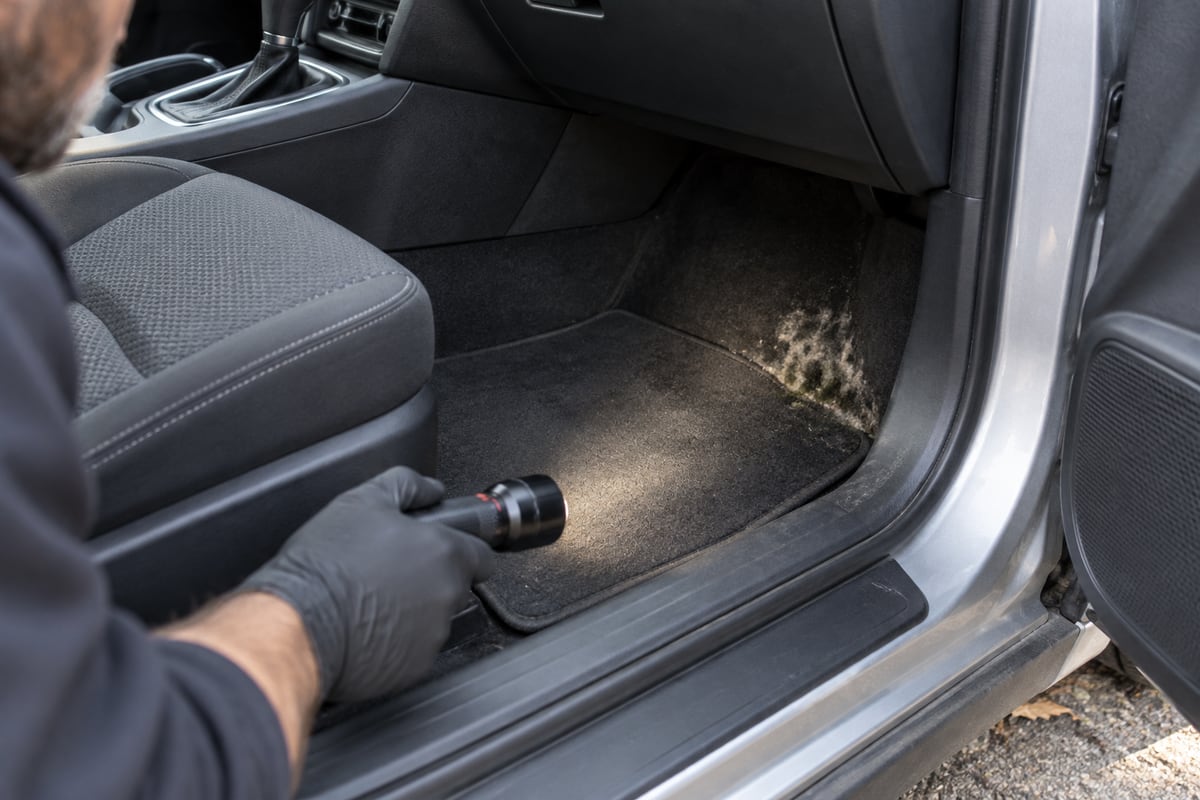
For a car without flood or electrical concerns, inspect it parked outdoors in dry weather, with the engine off. Remove loose rubbish and look under removable mats without tearing apart trim or seats.
Use these observations to guide a repair inspection:
- Wetness after rain: Ask about door and window seals, windshield sealing, sunroof drains, and body leaks.
- A wet passenger footwell: Ask the shop to distinguish rain entry, an air-conditioning drain problem, and other fluid leaks.
- Dampness in the trunk: Check the spare-wheel well and surrounding trim for water collecting out of sight.
- One moldy bag or spilled drink: Remove the source, then inspect the surface underneath and nearby seams.
- Odor mainly when the fan starts: Have the cabin filter, evaporator, and drainage checked.
These are inspection leads, not a diagnosis. Do not force wire or compressed air into drain tubes, which can require model-specific service. Our guide to how quickly mold grows after water damage explains why drying promptly matters, although it does not set a vehicle repair timeline.
Decide Whether DIY Cleanup Is Reasonable
A small patch on an accessible hard surface or removable washable mat is a more reasonable home project than growth across multiple seats. Use a detailer or restoration specialist with mold and water-damage experience when the source or extent is uncertain.
Get professional help if growth reaches seat cushions, carpet underlay, headliner, seat belts, or inaccessible areas; if the interior was soaked by contaminated water; or if mold returns after cleaning. Avoid using the car while an extensive problem is being assessed, particularly if being inside provokes symptoms.
The EPA's household mold guide explains why deeply contaminated porous material may be impossible to clean fully. That principle helps explain the concern with absorbent car interiors, but the EPA's household area thresholds are not vehicle clearance standards.
Clean Limited Surface Growth Carefully
Wear gloves, eye protection, and a well-fitting N95 when handling visible mold. Arrange for someone else to do the work if you have a condition that makes mold exposure risky. Keep other occupants away from the work area. These precautions follow CDC mold cleanup guidance.
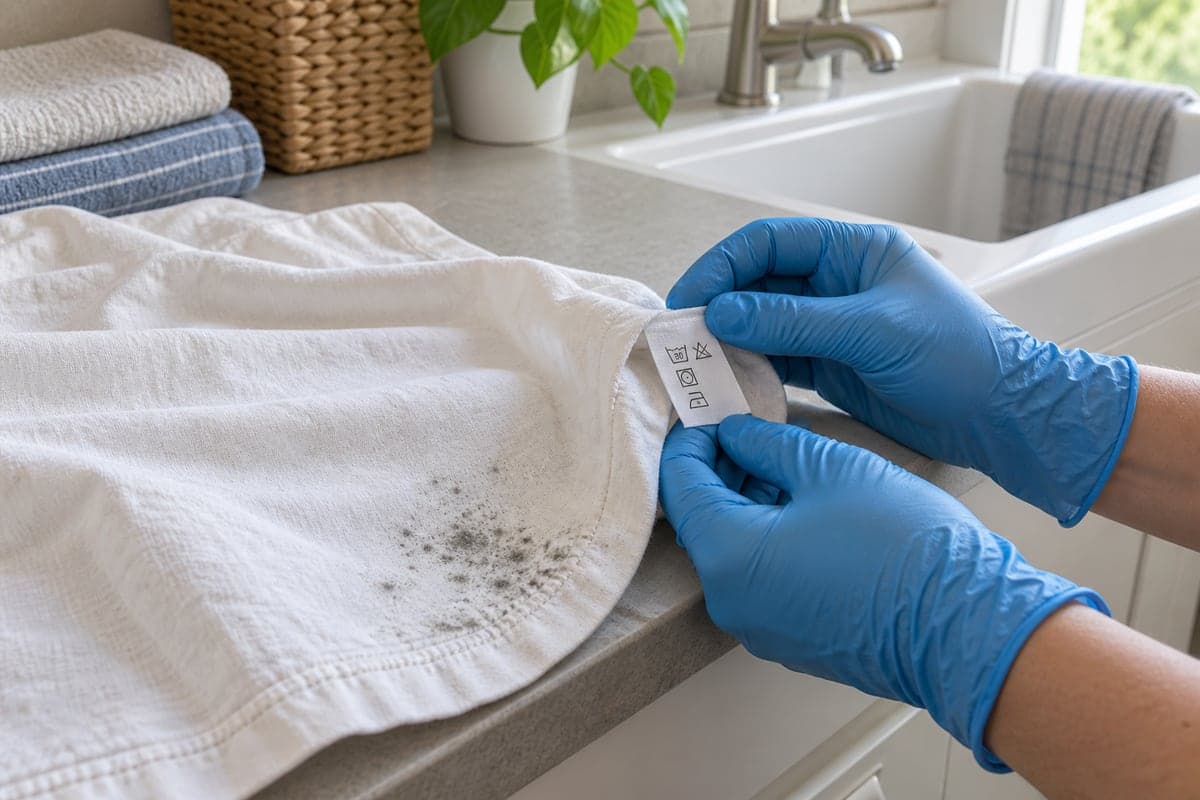
- Remove affected loose items gently. Avoid shaking mats or brushing mold into the cabin. Handle washable clothing separately using our mold-stained clothing guide.
- Check the owner's manual. Identify the material and its approved cleaning method. Upholstery, coated leather, screens, and belt webbing do not share one cleaning recipe.
- Test the allowed cleaner in a hidden area. Stop if the dye transfers, the finish changes, or the material becomes tacky.
- Wipe cleanable hard surfaces with a lightly dampened cloth. Apply an approved cleaner as directed. Keep liquid away from switches, connectors, airbag seams, and belt mechanisms.
- Treat a removable mat only if its care instructions permit it. Clean it outside the car and dry it completely, including the backing. Replace or have it assessed if growth or odor persists.
- Recheck underneath before putting anything back. Damp fixed carpeting or cushioning needs access and drying that a surface wipe cannot provide.
For material-specific cautions, Ford's interior-care instructions prohibit bleach and solvents on seat belts and warn about strong cleaners near seat-mounted airbags. Follow the equivalent instructions for your own vehicle. Do not remove seats or disconnect airbag wiring as part of casual DIY cleaning.
Dry the Interior and Recheck It
Let removable items dry in a secure, sheltered place with airflow. Keep the car protected from further rain while it dries. Do not idle it in a garage to run the heater, or use an improvised heater inside the cabin.
If a shop extracts water from fixed carpet or seats, ask how it will check the padding and cavities underneath. A dry surface or a certain number of hours in sunshine does not establish that these layers are dry.
Before routine use, look for a repaired moisture source, no remaining visible growth, dry affected materials, and no returning musty odor. A flood-damaged vehicle also needs the separate mechanical and electrical assessment. The distinction between cleanup and correcting the whole problem is explained in our mold remediation guide.
Handle Vent Odors and Avoid Quick Fixes
A musty fan smell does not prove mold throughout the car. A Toyota HVAC odor service bulletin describes moisture and odor in the evaporator and model-specific service options. Have a technician investigate recurring odor; replacing a dirty cabin filter may be one part of the work, but does not dry soaked carpet or repair a leak.
Do not spray bleach, fragrance, or a household disinfectant into the vents. Avoid ozone generators as a DIY mold treatment. The EPA's ozone assessment finds that concentrations within public health limits do not effectively remove mold, and embedded contamination may remain even at high concentrations.
Frequently Asked Questions
Is black mold in a car more dangerous than other mold?
Color alone cannot identify the organism or predict a particular health risk. Our mold and mildew explanation covers that distinction. Address visible growth and moisture regardless of color, and seek medical advice if exposure triggers symptoms.
Will vinegar remove mold from car seats?
Do not assume vinegar is compatible with the upholstery, stitching, leather finish, or nearby components. Use the vehicle's care instructions and assess whether growth extends into padding before choosing a cleaner.
Does a car get hot enough in the sun to kill mold?
Sunshine is not a validated whole-car mold treatment. Temperatures and moisture vary throughout seats, carpet, and cavities. Physical cleaning, drying, and fixing water entry still matter.
How much does professional car mold removal cost?
Get a written quote after inspection. Ask whether it includes finding the leak, accessing padding, replacing materials, HVAC service, and drying verification. Household remediation prices should not be used as a car-cleaning estimate.
Can I keep mold from coming back during storage?
Clean and fully dry the interior before storage, remove wet clothing and food, repair leaks, and inspect periodically. A moisture absorber cannot compensate for standing water or a leaking seal.